


The Pittsburgh Steelers are officially in a new era, but the end of the Mike Tomlin era is still being examined. Tomlin’s consistency was never the issue in Pittsburgh. The problem was that the Steelers kept reaching the same postseason wall, and eventually, even the defense stopped feeling like the solution.
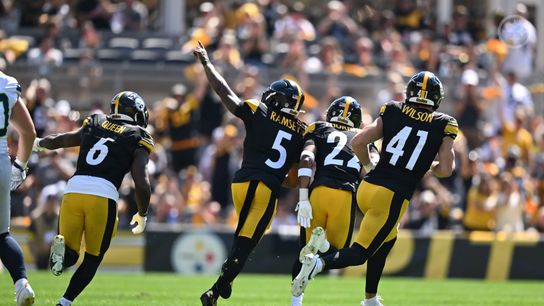
Karl Roser / Pittsburgh Steelers
Steelers' Jalen Ramsey and other members of the defense celebrate after forcing a turnover during the 2025 season against the Seattle Seahawks in Week 2.
For most of Tomlin’s tenure, his defensive background was one of the strongest parts of his reputation. He arrived in Pittsburgh as a young defensive-minded coach, helped guide the Steelers to a Super Bowl title, and kept the franchise competitive for nearly two decades. Even when the offense became stagnant in later years, the defense was often expected to keep the team alive.
The problem is that the standard became harder to defend as the playoff losses kept piling up. Pittsburgh’s defense had plenty of expensive pieces, veteran leaders, and star power, but the unit too often failed to control games when the season was on the line. That became one of the biggest frustrations during the final stretch of Tomlin’s time with the organization.
Ray Fittipaldo of the Pittsburgh Post-Gazette addressed that issue during an appearance shared by 93.7 The Fan. Fittipaldo said opposing teams seemed to get a better handle on what Tomlin wanted to do defensively, and the results were no longer good enough.
“I think teams kind of figured out what Tomlin wanted to do, and they were able to work around that,” Fittipaldo said. “In his own words, it wasn’t good enough. They were not getting over the hump with him as the head coach and I think with him being known as a defensive guy, you certainly could say yes, the defense was certainly lacking, if not in the regular season, certainly in the playoffs.”
That is a harsh assessment, but it gets to the center of why the Steelers had to change. This was not simply about one bad game or one disappointing season. Pittsburgh had gone too long without a playoff victory, and the same themes kept showing up. The Steelers could win enough regular-season games to stay relevant, but they were not adjusting well enough when the competition became sharper.
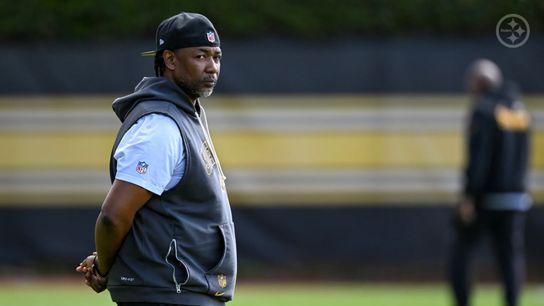
Karl Roser / Pittsburgh Steelers
Steelers' Patrick Graham coaches during voluntary veteran minicamp in 2026.
Tomlin deserves credit for a lot. His teams rarely collapsed. He managed difficult personalities, navigated quarterback transitions, and kept Pittsburgh from bottoming out during years when the offense was not close to championship level. His floor as a head coach was impressive, and that is part of why he lasted 19 seasons.
Still, the ceiling matters too. The Steelers were not trying to be a respectable team that simply avoided embarrassment. They were trying to win championships. When a franchise goes nearly a decade without a postseason win, the conversation eventually shifts from stability to stagnation.
The defensive criticism is especially important because Pittsburgh invested so much on that side of the ball. The Steelers were not operating with a stripped-down unit full of stopgaps. They had TJ Watt, Cameron Heyward, Minkah Fitzpatrick, Alex Highsmith, and other legitimate defensive talent during different points of the drought. The expectation was that the defense would travel in January.
Instead, the Steelers often looked too predictable when the games mattered most. Opposing offenses were able to find answers, and Pittsburgh did not consistently counterpunch. That was the part that made the playoff failures feel more alarming. A defensive coach losing control of the defensive identity is a much different problem than simply having an undermanned roster.
Tomlin himself was critical of the defense after the 2025 playoff loss, and SteelerNation covered how he tore into the unit after the poor showing against Houston. That game became a fitting end to the frustration. The defense kept Pittsburgh in it for a while, but once the game tilted, the Steelers had no real answer.
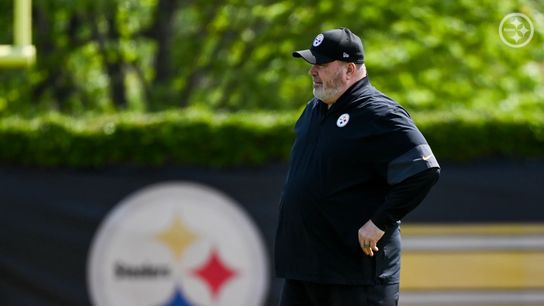
Taylor Ollason / Pittsburgh Steelers
Steelers’ head coach Mike McCarthy looks off into the distance as he pays close attention during the team's 2026 rookie minicamp taking place in Pittsburgh, PA.
Now, Mike McCarthy and Patrick Graham are trying to change the feel of the operation. Graham does not have to erase everything Tomlin built, but he does have to make the defense harder to solve. Pittsburgh needs more disguise, better situational answers, and a unit that does not rely only on star players winning individual matchups.
That is where the new staff will be judged. It is easy to say the old approach was not good enough. It is much harder to build something better. The Steelers still have enough talent to be a strong defense, but the scheme and weekly adjustments have to match the investment.
Steelers Needed A New Defensive Direction
The Steelers’ decision to move into a new era was not only about offense. It was also about the defense no longer being able to carry the old identity. Tomlin’s background made that harder to ignore, because defensive breakdowns reflected directly on the thing he was supposed to know best.
Fittipaldo’s comments are not a dismissal of Tomlin’s entire career. They are a reminder of why the ending became unavoidable. Pittsburgh was no longer getting over the hump, and the defense was part of the problem.
The Steelers now have a chance to become less predictable and more adaptable. If Graham’s system gives the defense a sharper edge, the criticism of the old approach will only grow louder. If not, Pittsburgh may find out that the issue was even deeper than Tomlin.
#SteelerNation